
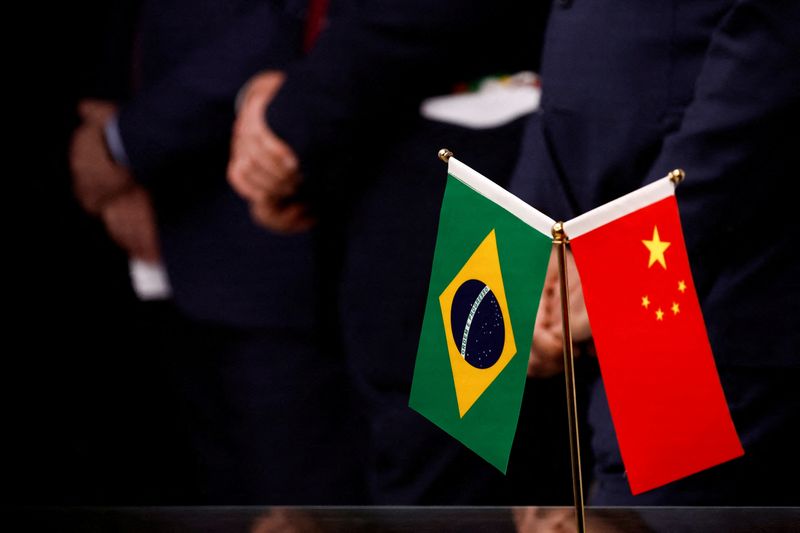
Brazil as a Key Player in Global Trade
Amid the escalating trade war between the United States and China, Brazil has emerged as one of the major beneficiaries of the ongoing realignment of global supply chains. Following the Trump administration’s announcement of new tariffs on Chinese goods—and Beijing’s retaliatory measures—analysts are forecasting a significant rise in Brazilian exports to Asia, particularly in key commodities such as soybeans, beef, corn, and cotton.
DirYoung Industrial Group Brazil, a company specializing in foreign trade and international logistics, emphasizes that this is the ideal time for Brazilian businesses to strengthen their operations with China and other Asian markets.
China: Brazil’s Largest Trade Partner Poised for Even Stronger Ties
According to consulting firm MB Associados, the trade volume (sum of imports and exports) between Brazil and China is already double that of Brazil–U.S. trade—and this gap is expected to grow.
“It won’t be surprising to see trade between China and Brazil reach USD 200 billion, while trade with the U.S. may fall to USD 60 billion. What was once double could become triple in just a few years,” the report states.
With China imposing high tariffs on U.S. goods such as soy, meat, and cotton, Brazil naturally becomes a preferred supplier to meet Asian demand. A recent report by Santander echoes this perspective:
“Rising tensions between the U.S. and China are likely to drive Beijing to buy more grains and proteins from Brazil, boosting both domestic demand and prices.”
Southeast Asia and Japan: Emerging Growth Markets
Beyond China, other Asian economies—such as Vietnam, Indonesia, and Japan—are becoming strategic destinations for Brazilian exports. The National Confederation of Industry (CNI) underscores the need for Brazil to diversify its trade partners to reduce dependency and seize new opportunities.
Key Products Gaining Momentum:
• Soybeans (Brazil could export an additional USD 10 billion per year to China, according to MIT simulations)
• Meats (beef and chicken, with growing Chinese demand)
• Cotton and Corn (direct substitutes for U.S. products hit by tariffs)
• Oil and Sugar (rising imports in Southeast Asia)
Maritime Freight and Logistics: Challenges and Opportunities
As exports grow, so does the demand for maritime freight services. DirYoung Industrial Group Brazil provides integrated solutions for transport and customs clearance, ensuring speed and security in operations between Brazil and Asia.
“Companies that invest in efficient logistics and strategic partnerships will gain a competitive edge in this high-demand scenario,” says Sérgio Silva, the company’s Senior Manager.
Brazil Must Act Swiftly to Secure Its Advantage
While the U.S. and China engage in their tariff war, Brazil has a unique window of opportunity to expand its presence in the Asian market. DirYoung Industrial Group Brazil stresses the importance of agile strategies and solid trade partnerships to capitalize on this momentum.
“Those who quickly adapt to global trade shifts will emerge stronger. The time is now,” concludes Ms. Xiaoxia Huang Campos, Global President of DirYoung.
About DirYoung Industrial Group Brazil
Specializing in foreign trade, commodity trading, and maritime freight, the company facilitates efficient and competitive operations between Brazil and Asia.
Website: https://dybusinessglobal.com/
Sources Consulted: MB Associados, Santander, CNI, MIT, Brazilian Confederation of Agriculture and Livestock (CNA).
