
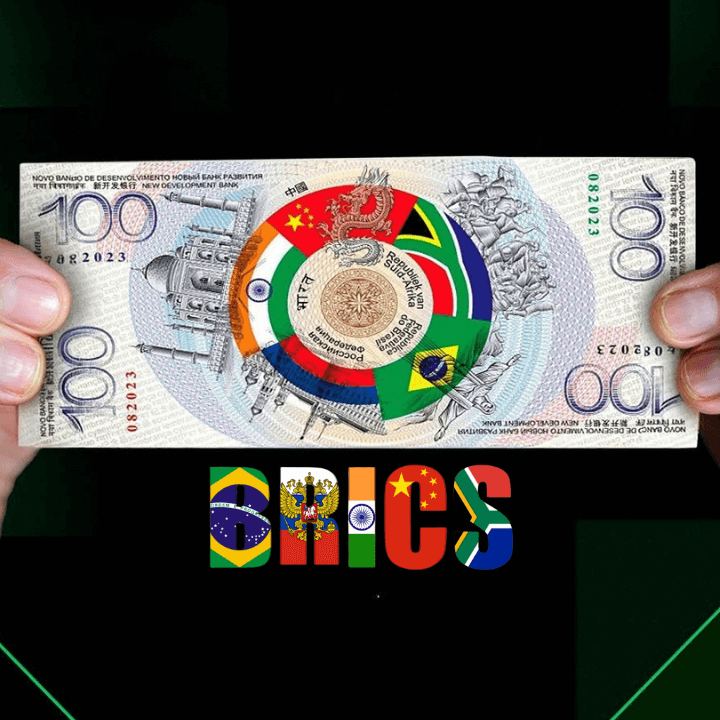
The BRICS economic bloc, composed of Brazil, Russia, India, China, and South Africa, is at the center of a debate that could reshape the global financial landscape. The proposal to create a new common currency, possibly digital, aims to facilitate trade transactions among member countries and reduce dependence on the U.S. dollar. But what are the details of this project? And how could it impact the global economy?
What is BRICS, and Why a Common Currency?
BRICS brings together five of the world's largest emerging economies, representing approximately 42% of the global population and 24% of the world's GDP. The idea of a common currency emerges as a strategy to strengthen economic cooperation among member countries while challenging the dominance of the U.S. dollar, which currently prevails in international trade and global currency reserves.
The proposal includes the possibility of a digital currency, known as a Central Bank Digital Currency (CBDC), which promises faster, more secure, and cost-effective transactions. This innovation could facilitate trade within the bloc and enhance its influence on the international economic stage.

Challenges and Resistance to the Project
Despite its potential benefits, the creation of a common currency faces significant obstacles. One of the main challenges is harmonizing fiscal and monetary policies among member countries, which have vastly different economies and political systems. Additionally, there is resistance from nations that view BRICS as a threat to the stability of the U.S. dollar and America's economic hegemony.
Recently, the U.S. government, under Donald Trump’s leadership, expressed opposition to the proposal, threatening to impose 100% tariffs on products from BRICS countries if they proceed with the currency initiative. This stance reflects concerns over the possible weakening of the dollar and the loss of U.S. global influence.
Impact on International Trade and Commodities
The implementation of a BRICS common currency could revolutionize international trade, particularly in the commodities market. Currently, products such as oil, gas, and precious metals are primarily traded in U.S. dollars. With a new currency, BRICS nations could reduce this dependency, increasing transaction stability and predictability.
Furthermore, the BRICS currency could be used as a reserve asset, diversifying member countries’ financial portfolios and mitigating risks associated with reliance on a single currency. This shift could also help bypass economic sanctions, such as those imposed on Russia following its invasion of Ukraine.

Advantages for the Global Population
The BRICS currency would not only benefit member nations. For the global population, especially in emerging and developing countries, reducing dependence on the U.S. dollar could bring greater economic stability and protection against exchange rate fluctuations. Additionally, facilitating international trade could lead to lower prices and improved access to goods and services.
A Promising Future for International Trade
Although still in the discussion phase and surrounded by challenges, the creation of a common BRICS currency represents a unique opportunity for companies such as DirYoung Industrial Group Brasil, which operates in international import and export trade. A digital common currency could simplify and accelerate commercial transactions, reduce operational costs, and minimize risks associated with dollar exchange rate fluctuations.
For DirYoung, which already has a strong presence in emerging markets, the BRICS currency could open doors to more efficient and competitive business opportunities, particularly in sectors such as commodities, technology, and industrial goods. Reducing dollar dependency and facilitating trade among bloc nations could strengthen strategic partnerships and expand access to new markets.
As BRICS leaders advance negotiations, DirYoung Industrial Group Brasil envisions a promising future filled with opportunities to drive growth and innovation in international trade. The company remains vigilant to changes and prepared to adapt, reinforcing its commitment to excellence and global expansion.
By De Young Group Brasil Communications Office.
